


PREFACE
PREFACE
The twenty-first century has witnessed an unprecedented acceleration in digital transformation, technological innovation, and sustainability-oriented development. Artificial intelligence, big data analytics, digital platforms, machine learning, and intelligent decision-support systems are fundamentally reshaping industries, business models, public institutions, and consumer behavior. Simultaneously, increasing environmental concerns, evolving market expectations, and rapid technological advancements have created both new opportunities and complex challenges for organizations operating in an increasingly interconnected global economy.
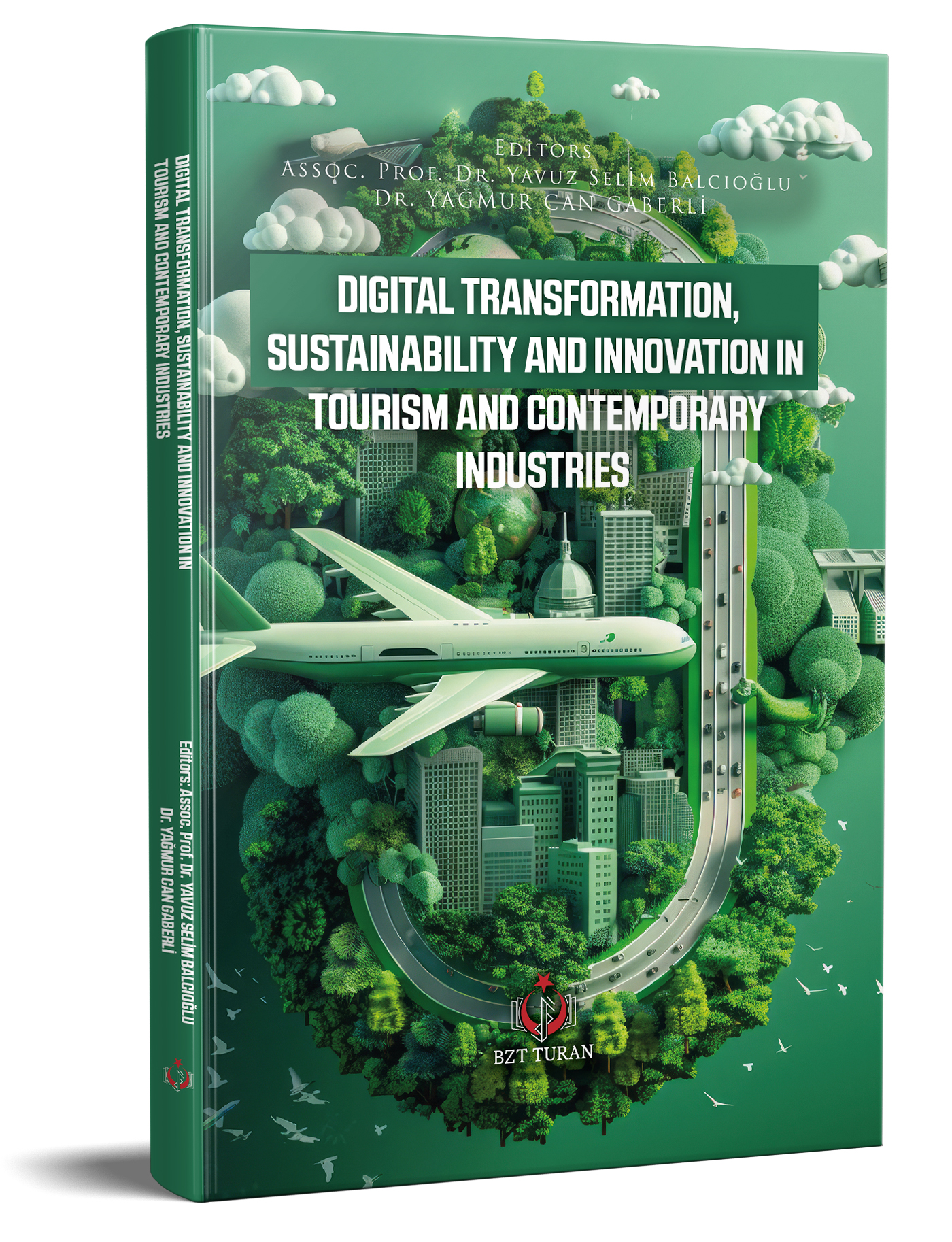
This volume brings together multidisciplinary research that explores the strategic implications of digital transformation across business, tourism, sustainability, environmental management, marketing, auditing, and organizational studies. Rather than examining technological innovation as an isolated phenomenon, the chapters investigate how emerging digital technologies influence organizational performance, strategic decision-making, environmental responsibility, consumer trust, and long-term competitive advantage in diverse sectors.
A central focus of this book is the transformative role of artificial intelligence and data-driven technologies in modern organizations. Several chapters examine the integration of artificial intelligence into advertising, consumer behavior, digital marketing, electronic auditing, business analytics, and strategic management. These studies demonstrate how intelligent technologies have become essential drivers of innovation, operational efficiency, transparency, risk management, and customer engagement, while simultaneously transforming organizational structures and managerial decision-making processes.
Another major theme of the volume is sustainability and strategic environmental management. The contributions address life cycle assessment, carbon footprint analysis, sustainable packaging systems, circular economy practices, and environmentally responsible decision-making. Collectively, these studies highlight that environmental sustainability has evolved from a regulatory requirement into a strategic priority that enhances organizational resilience, corporate reputation, and long-term competitiveness.
The volume also presents contemporary perspectives on tourism and destination management within the context of digital transformation. Through studies examining industrial heritage, destination branding, experiential tourism, digital promotion strategies, and sustainable transportation, the chapters illustrate how cultural heritage and technological innovation jointly contribute to regional development, visitor satisfaction, and destination competitiveness. These contributions emphasize the growing integration of tourism management with digital ecosystems and the global experience economy.
Taken together, the chapters presented in this volume demonstrate that digital transformation extends far beyond technological advancement. It represents a comprehensive paradigm that influences organizational strategy, sustainable development, consumer behavior, environmental governance, public administration, and industrial competitiveness. By combining theoretical perspectives with practical applications, the studies offer valuable insights for researchers, academics, policymakers, business leaders, and graduate students seeking to understand the evolving relationship between digital innovation and sustainable development.
We hope that this volume will serve as a valuable academic resource and contribute to ongoing scholarly discussions in digital transformation, artificial intelligence, strategic management, business analytics, sustainable development, tourism studies, marketing, environmental management, auditing, and related interdisciplinary fields.
Finally, we would like to express our sincere gratitude to all contributing authors for their scholarly dedication, intellectual rigor, and valuable contributions. Their research has significantly enriched this volume and strengthened its contribution to the contemporary scientific literature. We also hope that the ideas presented in this book will inspire future interdisciplinary collaborations and innovative research addressing the opportunities and challenges of an increasingly digital and sustainable world.
Editors
Assoc. Prof. Dr. Yavuz Selim Balcıoğlu
Dr. Yağmur Can Gaberli




Değerlendirmeler
Henüz değerlendirme yapılmadı.