


Description
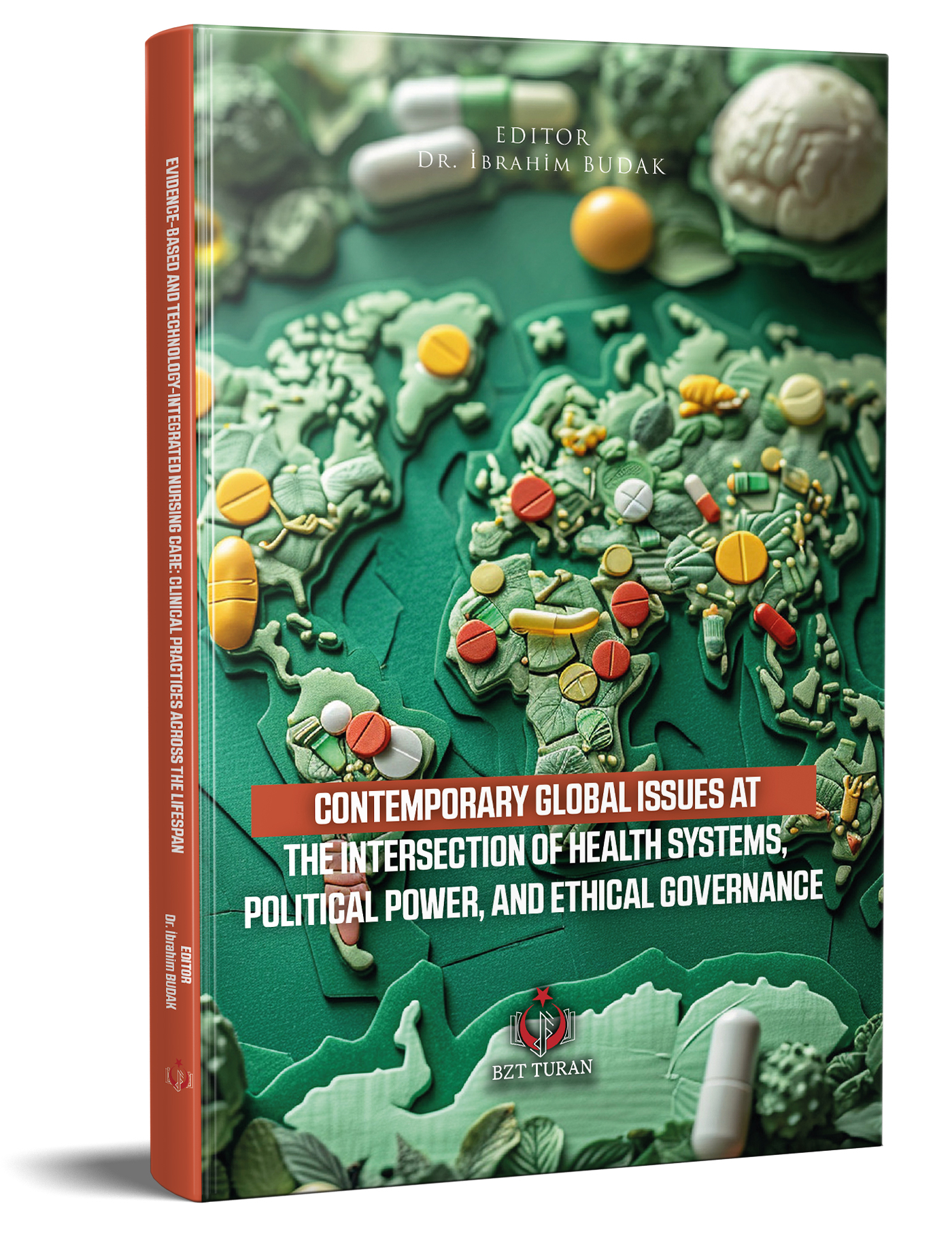
In an era characterized by rapid technological advancement, shifting geopolitical dynamics, and intensifying ethical challenges, the intersections between health systems, political power, and governance have become increasingly visible and consequential. Contemporary global crises—ranging from digital health transformations to humanitarian disasters—require interdisciplinary analyses that transcend conventional disciplinary boundaries. The present volume, Contemporary Global Issues at the Intersection of Health Systems, Political Power, and Ethical Governance, brings together critical scholarly contributions that examine these complex interactions through the lenses of health sciences, political science, organizational studies, and ethics.
Digital transformation in healthcare constitutes a central axis of this book. The chapter “Global Research Trends in Telemedicine and Mobile Health (1995–2025): A Bibliometric and Network Analysis” provides a comprehensive, data-driven overview of the evolution of telemedicine and mobile health research over the past three decades. Employing bibliometric and network analysis methodologies, the study maps global scientific collaboration patterns, thematic concentrations, and emerging research priorities, demonstrating how digital health technologies are reshaping healthcare access, equity, and system resilience on a global scale.
The geopolitical dimensions of power and influence are critically explored in “China’s Soft Power Policy in Africa under Xi Jinping.” This chapter analyzes China’s strategic use of economic engagement, healthcare cooperation, development assistance, and cultural diplomacy as instruments of soft power across the African continent. By situating health-related initiatives within broader foreign policy objectives, the study offers valuable insights into how health systems function as arenas of political influence, international competition, and global governance.
Organizational resistance and barriers to innovation within healthcare institutions are examined in “Dinosaur Syndrome and Resistance to Change: Barriers to Innovative Transformation in Healthcare Organizations and Solution Strategies.” This chapter investigates structural inertia, leadership constraints, and organizational culture as key factors impeding innovation in healthcare settings. By identifying both systemic challenges and practical solution strategies, the study contributes to the literature on organizational governance and underscores the importance of adaptive leadership and ethical management in health system transformation.
The ethical responsibilities of media, governance structures, and child protection during humanitarian crises are addressed in “Protection of Children’s Rights and Ethical Media Representations during the 2023 Kahramanmaraş Earthquake.” This chapter critically evaluates media practices, ethical frameworks, and human rights considerations in disaster reporting, with particular attention to children as vulnerable populations. It highlights the necessity of ethical governance, responsible communication, and rights-based approaches during periods of large-scale societal trauma.
Taken together, the chapters in this volume demonstrate that health systems function not only as clinical and technological infrastructures but also as political, ethical, and social institutions embedded within global power relations. By integrating perspectives on digital health innovation, geopolitical strategy, organizational change, and ethical responsibility, this book offers a multidimensional analysis of contemporary global challenges. It is intended as a valuable resource for researchers, policymakers, healthcare leaders, media professionals, and graduate students seeking to understand and navigate the complex dynamics at the intersection of health, power, and governance in the modern world.


Reviews
There are no reviews yet.