


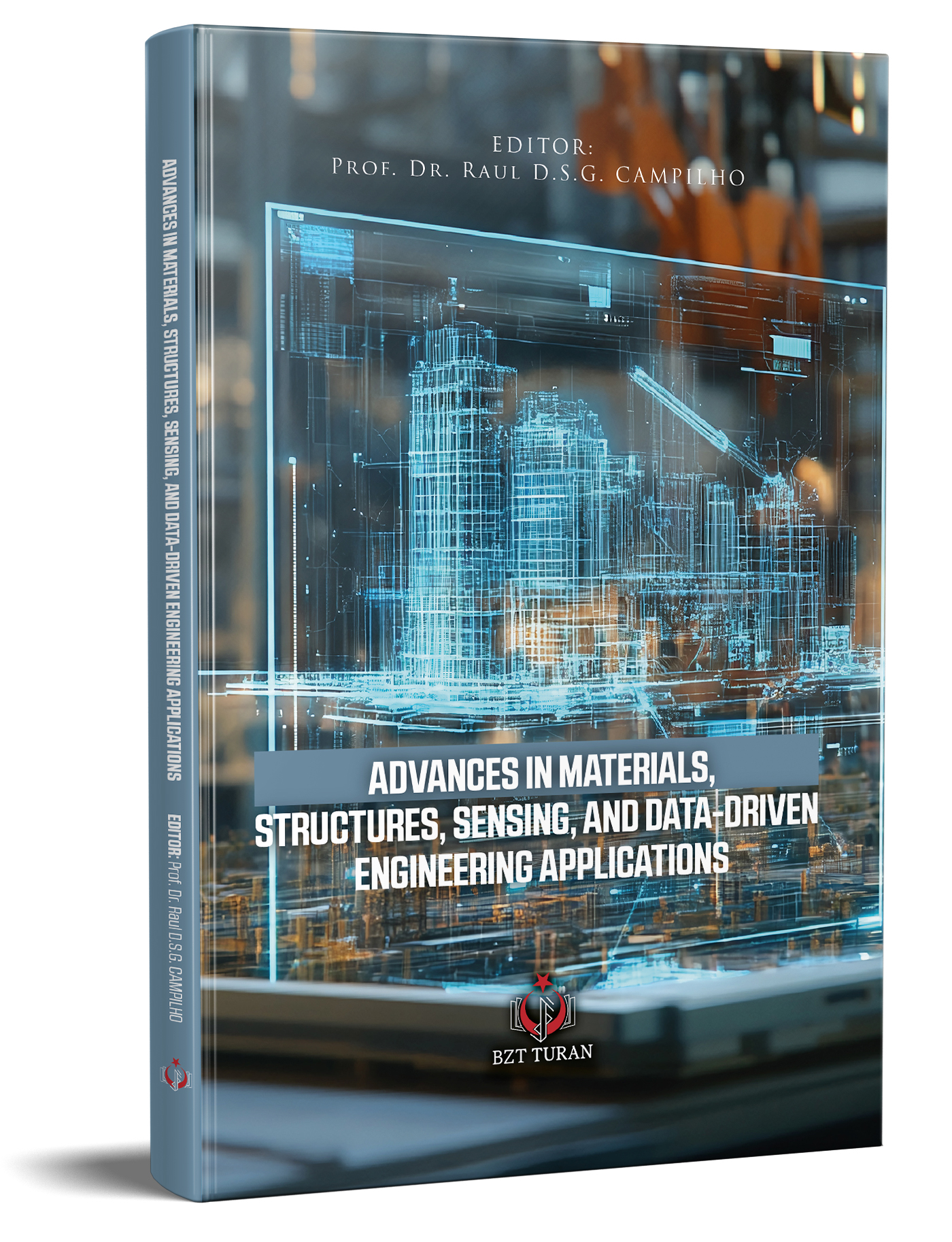
Description
Engineering research today ranges from the design of high-performance materials and structures to the development of intelligent systems and human-centered solutions. The challenges faced by industry, defense, sport, and society require specialized approaches and an integration of perspectives from diverse domains. This book reflects such diversity by gathering contributions that combine advanced modeling, numerical analysis, sensing technologies, and data-driven methods to address problems of both technical and social importance.
The first part of the volume focuses on advanced materials and structural applications. It begins with a numerical study of ballistic protection using ultra-high-molecular-weight polyethylene (UHMWPE) and Kevlar plates, providing insights into hybrid armor systems. This is followed by a set of chapters dedicated to adhesive bonding in structural engineering, where cohesive zone modeling and extended finite element techniques are employed to evaluate impact performance, scarf geometries, and novel solutions in the canoeing boat industry. These works reinforce the importance of adhesives in modern structural design and propose new guidelines and improvements for their application in demanding environments.
The second part of the book transitions into sensing technologies with a study on drone-based ground-penetrating radar for subterranean object detection. This contribution highlights the growing role of unmanned aerial systems in defense, archaeology, and environmental monitoring, showing how classical radar methods can be adapted to modern mobility platforms.
The third and final part turns to data-driven and human-centered engineering. Here, one chapter introduces a sentiment filtering and recommendation system tailored for Turkish e-commerce, illustrating the impact of natural language processing and trust-weighted heuristics on consumer-oriented platforms. The final chapter addresses spatial quality in student dormitories, using a systematic literature review to compile and analyze problems affecting user well-being.
Taken together, these seven chapters emphasize the innovation of contemporary engineering research, demonstrating how fundamental advances in materials, mechanics, sensing, and data science can converge toward practical applications. It is my hope that this volume will serve as a valuable resource for researchers, practitioners, and students, and inspire further exploration of these topics.
Prof. Dr. Raul D.S.G. CAMPILHO



Reviews
There are no reviews yet.