


PREFACE
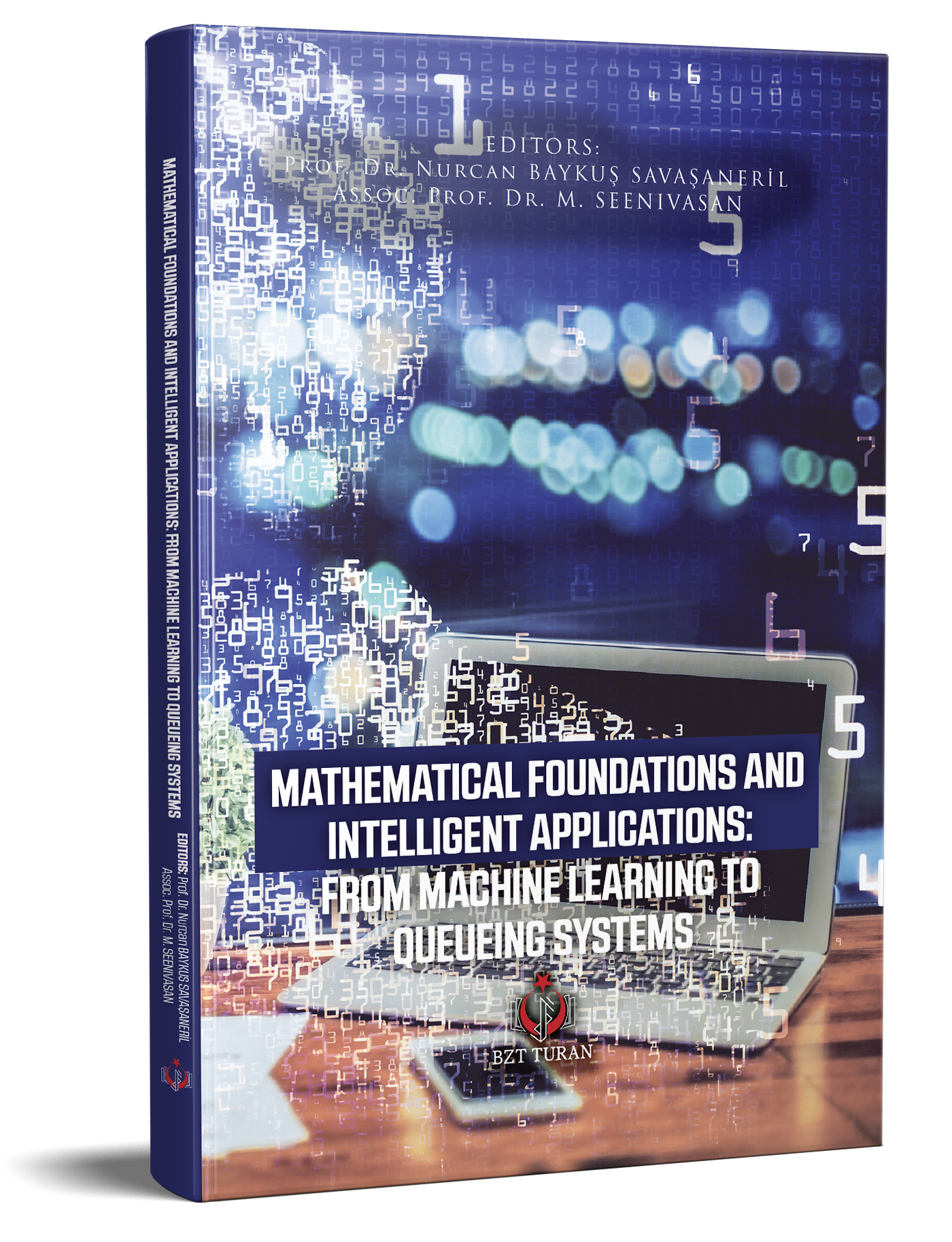
The accelerating developments in artificial intelligence and computational sciences have transformed not only how we solve problems but also how we conceptualize them. Mathematics, as the universal language of science, lies at the heart of these transformations, providing both the theoretical foundation and the methodological tools for innovation across diverse fields. This book brings together a collection of interdisciplinary studies that exemplify the intersection of mathematics, artificial intelligence, and applied probability, offering insights into both theoretical advancements and practical implementations.
The first chapter addresses the use of classical and fuzzy-based clustering algorithms in image segmentation for apple leaf disease detection — a timely example that combines machine learning with sustainable agriculture. By comparing different clustering methods and evaluating their performance, the study highlights how intelligent algorithms can enhance precision agriculture and contribute to global food security.
Another study focuses on the role of mathematics in artificial intelligence, underscoring the indispensable importance of calculus, linear algebra, probability, and optimization. Through applications in neural networks, image processing, and dynamic systems, the mathematical backbone of AI is clearly articulated, revealing how abstract mathematical structures translate into real-world problem-solving.
The volume also explores job recommendation systems using Wide & Deep Learning architectures enhanced with graph features. This contribution not only demonstrates the power of hybrid AI models in large-scale recommendation systems but also provides a systematic feature impact analysis, offering a roadmap for future research in data-driven human resource management.
In addition to machine learning applications, the book includes rigorous analyses of queuing theory models. One chapter develops an advanced single-server M/M/1 queuing system with working vacations, encouraged arrivals, reneging, and balking customers, providing steady-state solutions and performance metrics using matrix-geometric methods. Another chapter extends this investigation into variant server vacations and reneging behavior, revealing the impact of customer impatience and service interruptions on overall system efficiency.
Together, these studies demonstrate the breadth of mathematics-driven research across disciplines. From agriculture and healthcare to artificial intelligence and operations research, the collected works reflect a unifying vision: mathematics as both a theoretical framework and a practical tool for innovation in a rapidly changing world.
This book aims to serve as a valuable resource for researchers, practitioners, and students interested in the synergy between mathematics, artificial intelligence, and applied probability. By presenting both theoretical depth and practical case studies, it invites readers to appreciate the dynamic interplay between abstract models and their real-world implications.


Değerlendirmeler
Henüz değerlendirme yapılmadı.