


PREFACE
PREFACE
Surgical interventions are not merely medical procedures that affect an individual’s physical integrity and physiological functioning. Beginning with the decision to undergo surgery and continuing throughout the recovery process, the surgical experience may lead to multidimensional psychosocial responses, including anxiety, fear, uncertainty, stress, altered body image, loss of control, and concerns about the future. Therefore, achieving successful outcomes in the care of surgical patients depends not only on the safe performance of the surgical procedure and the fulfilment of physical care needs, but also on addressing the individual’s psychological, social, and behavioural needs through a holistic approach.
While Surgical Nursing focuses on the care needs of patients before, during, and after surgery, Mental Health and Psychiatric Nursing offers essential knowledge and practices for understanding emotional responses, supporting coping abilities, establishing therapeutic communication, and promoting psychological well-being. The integration of these two disciplines makes it possible to assess surgical patients not merely in terms of disease, surgery, or symptoms, but as individuals with unique emotions, thoughts, life experiences, social environments, and coping resources.
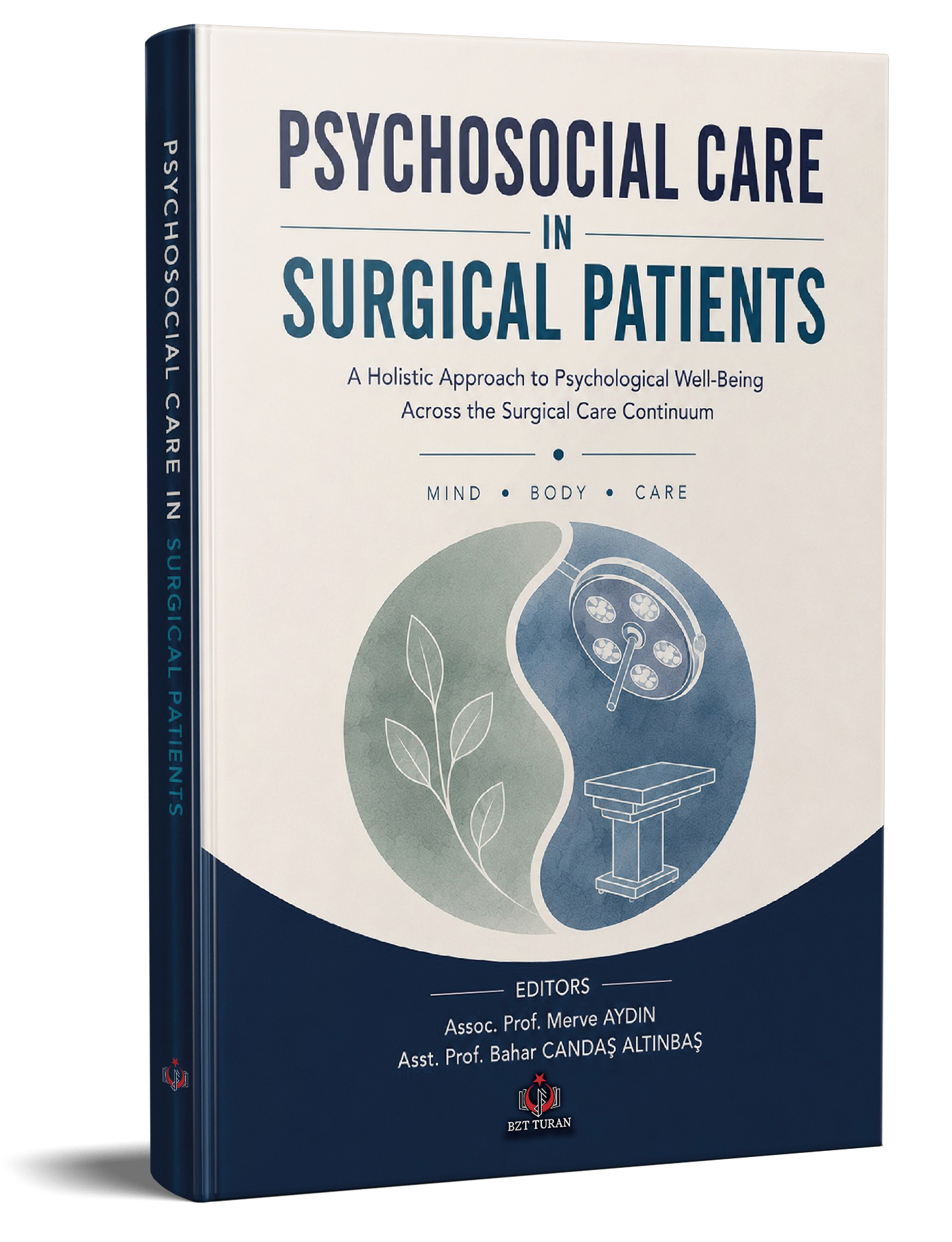
Prepared with this perspective, Psychosocial Care in Surgical Patients brings together the knowledge and practice of surgical nursing and mental health nursing, addressing the different dimensions of psychosocial care in surgical patients in a comprehensive manner. The book provides a holistic overview of the key psychosocial issues and nursing approaches relevant to surgical patient care.
The primary aim of this book is to support nurses and other healthcare professionals in recognising psychosocial problems that may arise in surgical patients at an early stage, using appropriate assessment methods, and planning individualised nursing interventions. At the same time, it emphasises that therapeutic communication, empathy, patient participation, psychological safety, and interdisciplinary collaboration are integral to clinical outcomes, alongside the technical and physical dimensions of surgical care.
We believe that this book, prepared through the scientific knowledge and clinical experience of expert authors, will serve as a valuable resource for nursing students, clinical nurses, academics, postgraduate students, and all healthcare professionals involved in the care of surgical patients. We would like to express our sincere gratitude to all chapter authors who contributed their knowledge, effort, and experience, to our colleagues involved in the publication process, and to everyone who helped bring this work to its readers.
We hope that Psychosocial Care in Surgical Patients will contribute to the advancement of person-centred, evidence-based, and holistic psychosocial care for surgical patients.
Sincerely,
Editors
Assoc. Prof. Merve Aydın
Asst. Prof. Bahar Candaş Altınbaş




Değerlendirmeler
Henüz değerlendirme yapılmadı.